Aster after the TGE: growth signals and sustainability
How to assess Aster activity after the 2025 token generation event using retention, liquidity, open interest and other durable growth signals.
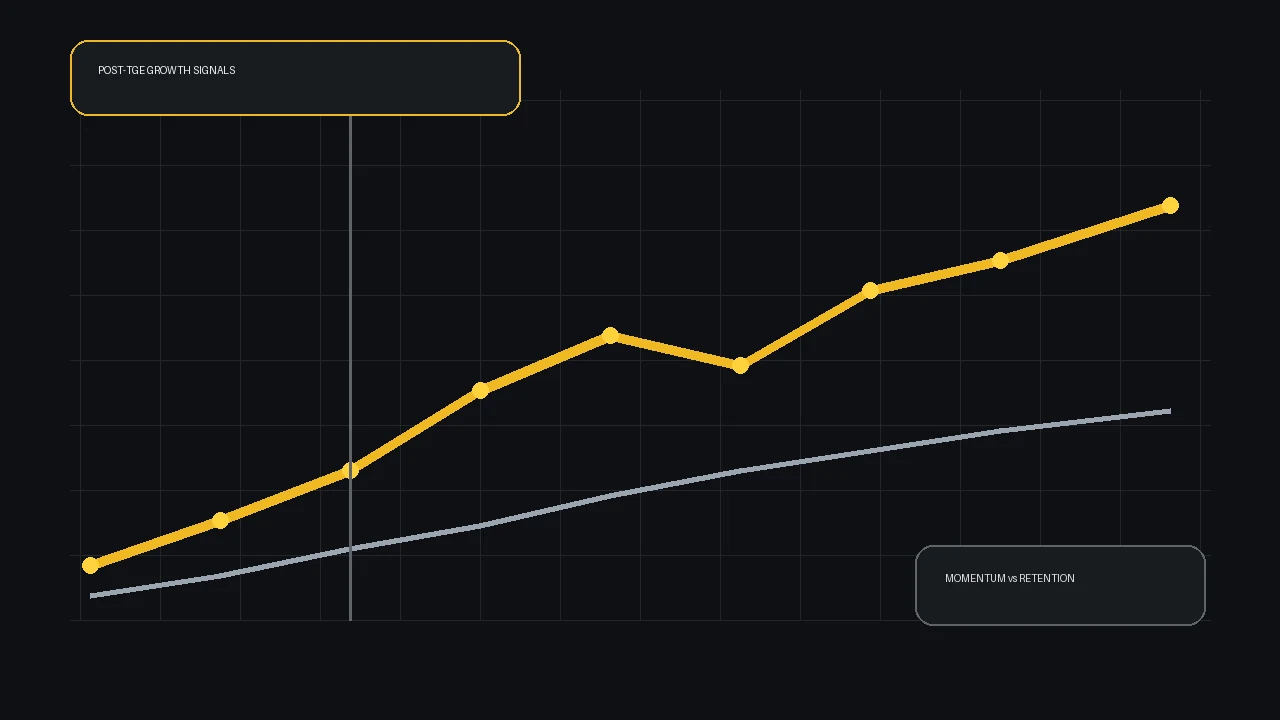
How to assess Aster activity after the 2025 token generation event using retention, liquidity, open interest and other durable growth signals.
Aster entered a different operating phase after the $ASTER token generation event on 17 September 2025. Token distribution, spot trading and withdrawals made it possible to evaluate whether launch activity could develop into repeat use.
TL;DR
- The TGE created a new baseline for measuring adoption rather than proving sustainable growth by itself.
- Volume, open interest and TVL should be read together with retained users and protocol revenue.
- Incentives, airdrop claims and short-term speculation can temporarily inflate headline metrics.
What changed after the TGE?
The launch made $ASTER transferable and tradable and moved Aster from a points-driven pre-token phase into a live-token market. That transition can increase attention, deposits and trading activity, but it also changes user incentives and makes short-term comparisons difficult.
Which growth metrics matter?
A useful assessment should compare active traders, trading volume, open interest, total value locked, repeat deposits, retained users and protocol revenue. No single number establishes durable adoption, and dashboard figures should be checked at the time of reading because they change continuously.
Why can early growth be misleading?
Claims, token listings, reward programs and market volatility can attract users who do not remain after incentives decline. Wash trading, leverage and repeated activity by the same accounts can also make raw transaction or volume counts look stronger than underlying demand.
What would show sustainable growth?
- Users returning after the initial claim and launch period.
- Trading activity that remains diversified across markets and chains.
- Open interest and liquidity growing without a comparable rise in liquidation or concentration risk.
- Product usage that is not dependent on a single reward campaign.
Risks and limitations
Aster is a leveraged trading protocol, so growth can increase exposure to liquidation, smart-contract, oracle and market-liquidity risks. Public dashboards are useful indicators but do not establish profitability, solvency or safety.
Related technical context
The growth question is separate from the product design. See Aster technical features: private orders and collateral modes for the protocol functions that may influence repeat use.
Conclusion
The post-TGE period should be treated as an observation window, not as proof that launch momentum is permanent. The strongest signal will be whether users, liquidity and trading activity remain after launch-specific incentives lose importance.