Tokenized stocks and real-world assets on BNB Chain: how the market reached $5.6B and what changed in 2026
BNB Chain now holds $5.6B in tokenized real-world assets and leads all blockchains in 2026 RWA growth. This explains what tokenization means mechanically, how OpenStocks brings private company equities on-chain, how BNB Chain compares to Ethereum, and what risks apply to on-chain asset exposure.
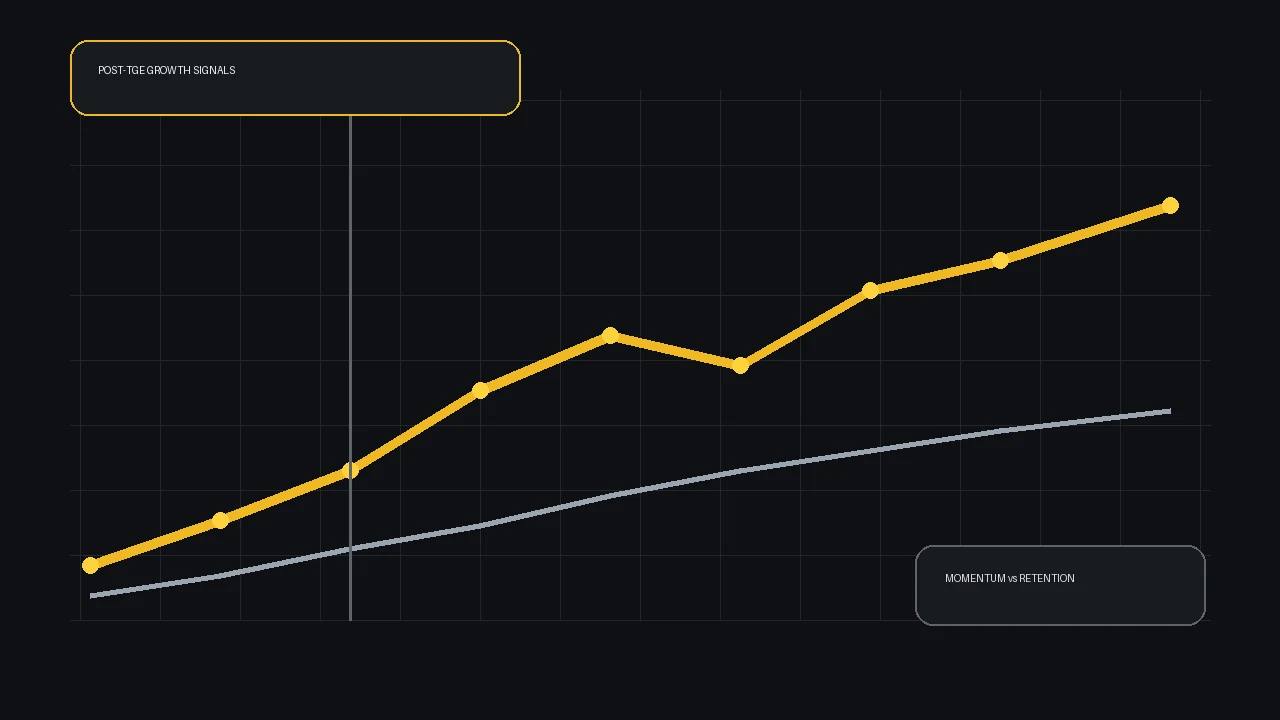
BNB Chain holds $5.6B in tokenized real-world assets and leads 2026 growth. What tokenization means in practice, how OpenStocks works, and what risks apply.
As of September 14, 2026, BNB Chain holds $5.6 billion in tokenized real-world assets across 1,408 distinct products, according to rwa.xyz — the leading analytics platform for on-chain assets. That places BNB Chain second globally behind Ethereum ($17.3B) but ahead of Solana ($4.3B) and Stellar ($3.4B) in a market that has grown to $38.86 billion in distributed RWA value. More striking than the current position is the growth: BNB Chain added $3.6 billion in RWA value in 2026 alone, outpacing Solana (+$2.6B) and Ethereum (+$1.6B) for the year.
This growth is not incidental. It reflects a deliberate repositioning of BNB Chain from a trading and DeFi platform into infrastructure for what the ecosystem calls on-chain finance — the settlement of real assets on programmable rails. Understanding what tokenization actually means, what changed in September 2026, and what risks accompany these products is the purpose of this article.
What tokenization means mechanically
A tokenized real-world asset is a blockchain token whose value is meant to track, represent, or be redeemable for a corresponding off-chain asset. The category is broader than it might seem. It includes tokenized US Treasury funds (where the underlying is government debt), tokenized gold (where a custodian holds physical bullion), tokenized private equity and venture capital, tokenized real estate, and tokenized equities — shares in public or private companies.
The mechanism in each case is similar. A sponsoring entity — a licensed financial institution, a technology platform, or a combination — acquires the underlying asset, holds it in custody, and issues a corresponding token on-chain. Users who hold the token hold a contractual claim on the underlying, subject to the terms of the issuer's structure and applicable law. The token can move instantly and 24/7. It can be transferred on-chain, used as collateral in DeFi protocols, or redeemed with the issuer for the underlying asset under whatever terms apply.
This is different from a synthetic or a perpetual contract. A synthetic or perp derives its price from an oracle feed and does not involve any claim on an underlying asset; it is purely a price-tracking instrument settled in crypto. A 1:1-backed tokenized asset, by contrast, is supposed to be backed by actual ownership of the underlying. Whether that backing holds up depends on the issuer's custody arrangements, auditing practices, regulatory compliance, and the legal enforceability of the claim in the relevant jurisdiction. None of these are guaranteed by the smart contract alone.
Why private company stocks specifically
Tokenized public company stocks — shares in Apple, Microsoft or Nvidia — have existed in various forms on blockchain networks since 2020, with mixed regulatory outcomes. Private company equities are newer and more complex. Private companies have no public exchange listing. Shares change hands rarely, in large blocks, at prices set by negotiation or funding rounds. Retail investors are typically excluded entirely from pre-IPO access.
Tokenization of private company equity attempts to address this exclusion by fractionalizing the exposure: instead of needing $100,000 or more to participate in a secondary round, a token holder can hold fractional exposure from as little as $1. The 2026 interest in tokenized private equities partly reflects anticipation around high-profile companies in the AI sector. Platforms offering access to names like Anthropic — the AI safety company valued at substantial multiples in private funding rounds — or Neuralink and Anduril are positioned at the intersection of crypto accessibility and pre-IPO speculation.
The distinction between holding a tokenized private equity product and actually owning a share in the company is legally significant. Tokenized private equity products typically do not confer voting rights in the company, do not appear on the company's cap table, and do not guarantee any path to liquidity if the company goes public. The economic exposure may be indirect — through a special purpose vehicle or a fund structure — rather than direct ownership of the company's actual shares. These details are set by the issuer's legal structure and are not readable from the token contract alone.
OpenStocks launched on BNB Chain
On September 10–11, 2026, OpenStocks announced its launch on BNB Chain. OpenStocks describes its tokens as 1:1-backed tokenized equity — not synthetics or perpetuals — in top private companies. The initial offering covers Anthropic, Anduril, Neuralink, and Figure AI. The platform is accessible at app.openstocks.xyz. Trades are self-custodial, settle in seconds on BNB Smart Chain, and markets operate 24/7. Fractional positions start at $1. The project is backed by YZi Labs, the investment arm associated with the BNB Chain ecosystem.
BNB Chain's official account welcomed OpenStocks on September 11, citing the availability of 1:1-backed tokenized equities trading around the clock as a feature consistent with BNB Chain's positioning as infrastructure for on-chain finance. The platform joins a broader trend: BNB Chain reported an all-time high tokenized stock market cap of approximately $3.2 billion across all chains in late August 2026, up roughly 1,219% year-on-year, with BNB Chain itself accounting for close to $988 million of that total.
How BNB Chain compares to Ethereum for RWAs
Ethereum dominates the RWA market at $17.3 billion distributed value but hosts a different type of product mix. The largest products on Ethereum are institutional: BlackRock's BUIDL fund ($2.7B), USYC ($2.6B), and major tokenized treasury funds with high minimum investments (BUIDL requires $5 million minimum) targeting qualified purchasers. These are not accessible to retail users.
BNB Chain's RWA growth in 2026 has come from products with lower minimums, 24/7 accessibility, and lower transaction costs — typically $0.005 or less per transaction at BSC's standard 0.05 Gwei gas price. PancakeSwap, with 200 million registered users, provides existing distribution infrastructure for any token that launches on BNB Chain. That combination — cheap transactions, established user base, DEX liquidity — makes BNB Chain an attractive place for issuers targeting retail-accessible products.
The tradeoff is regulatory clarity. Institutional products on Ethereum typically operate through compliant fund structures with legal opinions and qualified custodians. Retail-accessible products on BNB Chain operate in a more ambiguous regulatory environment that varies by jurisdiction. A user's ability to legally hold or redeem a tokenized stock product depends on the laws of their country, the issuer's compliance posture, and how the product is legally structured — factors that cannot be read from the token's on-chain properties.
What to verify before interacting with any RWA product
On-chain tracking of RWA positions is available through rwa.xyz for analytics, BscScan for contract inspection, and the issuer's own platform for balance and redemption status. Before depositing into any tokenized RWA product, the minimum useful checks are: (1) who holds the underlying asset and how that custody is verified — look for third-party audits or regulatory registration documents, not just platform claims; (2) what the redemption process is and under what conditions it can be suspended; (3) what the smart contract's upgrade path is — whether an admin can change the contract logic and under what governance; and (4) what jurisdiction's law governs disputes and whether that law applies in your country of residence.
The AvengerDAO risk API, integrated in BscScan and Trust Wallet, can flag contracts associated with known exploit patterns or high-risk ownership structures. A clean risk score does not validate the issuer's legal structure or custody claims; it addresses on-chain contract behavior only. Similarly, an audit report validates code logic at the time of audit and does not confirm that backing assets actually exist or will remain accessible.
What the $5.6B figure represents and what it does not
The $5.6 billion in RWAs on BNB Chain tracked by rwa.xyz as of September 14, 2026, is distributed asset value — the on-chain market capitalization of products tracked by the platform across the categories it monitors (stablecoins, government debt, credit, stocks, private equity, commodities, real estate). It is not a figure for user deposits, locked collateral, or verified underlying assets. Different products have different levels of backing verification, different redemption mechanisms, and different degrees of institutional vs. retail accessibility. The aggregate number describes market size, not financial guarantees.
The tokenized stocks subcategory specifically — not stablecoins or treasury funds — is the fast-growing area in 2026. Tokenized stocks grew 17% year-to-date and 26% over the past year as of the most recent rwa.xyz data. That growth reflects genuine interest in on-chain equity exposure but also the relatively small base from which the category is expanding. The total $3.2 billion tokenized stocks market cap across all blockchains remains a fraction of the global equities market.
BNB Chain's position as a leading RWA network in 2026 reflects real product development and user adoption. It also places BNB Chain at the intersection of trends — on-chain finance, 24/7 markets, AI-sector equities — where regulatory, custodial, and market risks are still being defined. Understanding those limits is as important as understanding the opportunity.
Sources
- rwa.xyz — BNB Chain network RWA data (September 14, 2026)
- OpenStocks launch announcement on X (September 10, 2026)
- BNB Chain official welcome of OpenStocks (September 11, 2026)
- BNB Smart Chain documentation — network overview
- BNB Chain — security programs overview (AvengerDAO)