BNB Chain reaches $30 billion in tokenized stock volume: what bStocks are and how on-chain equities work
BNB Chain confirmed $30 billion in cumulative tokenized stock trading volume in September 2026. This explains what bStocks are, how 1:1 backing works, who the main issuers are, how Venus and Lista DAO integrate them, and what practical and structural limits exist.
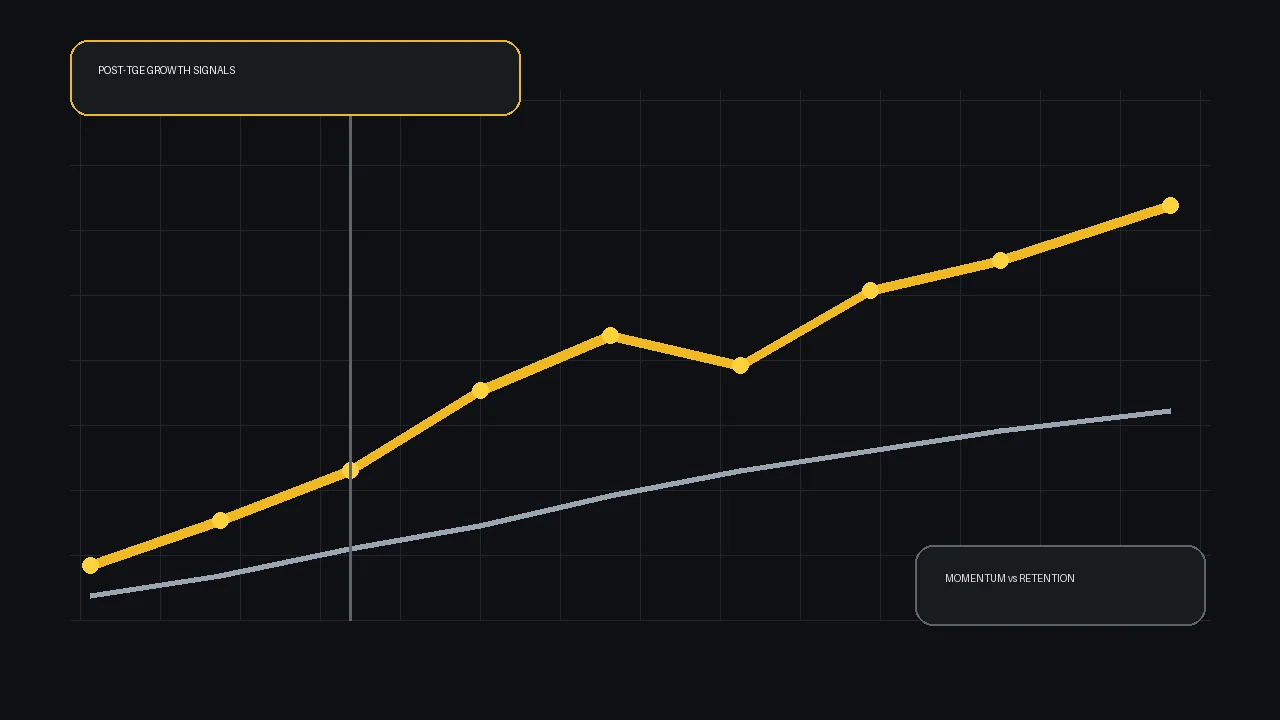
BNB Chain's tokenized stock ecosystem crossed $30 billion in cumulative trading volume in September 2026. bStocks are BEP-20 tokens backed 1:1 by real U.S. shares at a regulated custodian, trading 24/7 on-chain with automatic dividend reinvestment. Here is how the infrastructure works and what the risks are.
BNB Chain confirmed in September 2026 that cumulative tokenized stock trading volume on the network has reached $30 billion. This figure spans multiple issuers — bStocks (Binance), Ondo Finance, xStocks Finance, and others — and represents on-chain activity over an extended period, not a single-day number. It places BNB Chain as one of the leading settlement layers for tokenized equities, reportedly holding around 30% of global tokenized-equity market cap at certain points this year.
To understand what this number means, it helps to understand what tokenized stocks actually are, how the infrastructure works technically, and where the practical limits are for users and builders interacting with them.
What tokenized stocks are and how the 1:1 backing works
Tokenized stocks are blockchain tokens that represent ownership of, or economic exposure to, a traditional equity — a U.S. share or ETF, typically. On BNB Chain, the most common form is a BEP-20 token issued under a scheme where each token is backed 1:1 by an underlying share held at a regulated custodian. When you hold one NVDAB token, there is supposed to be one NVIDIA share (or share equivalent) held at a custodian on your behalf. When you sell the token, the custodian sells the underlying share and returns the proceeds.
The mechanics create a fundamental difference from synthetic products. A synthetic tokenized stock (for example, a perpetual contract tracking the price of a stock) has no underlying asset — it creates price exposure through counterparty agreement. A fully-backed tokenized stock, by contrast, requires the issuer to actually purchase and hold the underlying share. This creates a direct relationship between the token and a traditional financial asset, which is why the category falls under the real-world asset (RWA) umbrella in DeFi discussions.
The bStocks model, operated by Binance, works as follows. When a user acquires a bStock token (for example, QQQB, which tracks the QQQ ETF), Binance purchases the underlying ETF shares through regulated financial infrastructure and holds them at a custodian. The corresponding BEP-20 token is minted and credited to the user's account. Dividends paid by the underlying share are reinvested automatically as additional bStock tokens credited to the holder. Settlement is near-instantaneous on-chain — no T+1 clearing cycle. Trading is 24/7 with no market hours restriction, which is the most direct functional difference from traditional brokerage access.
The main issuers and what distinguishes them
The $30 billion figure aggregates activity across multiple issuers operating on BNB Chain. The main ones as of September 2026 are Binance (bStocks), Ondo Finance (OUSG and related products), and xStocks Finance. Each has a different model, regulatory positioning, and product scope.
Binance bStocks are the highest-volume product. They offer 70+ tokenized stocks and ETFs, are tightly integrated with the Binance exchange for deposit and withdrawal, and have expanded into cross-margin and portfolio margin collateral. The key limitation is geographic restriction: bStocks are not available in all jurisdictions, and eligibility requirements apply. U.S. persons are excluded from most bStock products.
Ondo Finance operates with an institutional focus. Its OUSG product provides tokenized exposure to U.S. Treasury bills rather than equities, but Ondo has been expanding into equities-adjacent products. Ondo's approach involves a regulated fund structure with SEC-registered securities at its base, which gives it a different compliance profile from Binance's model. The minimum investment thresholds are higher, and the primary target is institutional and qualified investor use cases.
xStocks Finance is a newer entrant focused on broader retail access and composability with DeFi. Its integration with BNB Chain focuses on enabling tokenized equities to be used as collateral and in yield strategies without the size minimums that institutional products require.
How DeFi protocols on BNB Chain are integrating tokenized stocks
The $30 billion volume figure is not just exchange trading — a significant portion comes from DeFi protocols using tokenized stocks as productive collateral. Two protocols with major tokenized stock integration are Venus Protocol and Lista DAO.
Venus Protocol added bStocks as collateral in its Core markets. Users can supply supported bStock tokens (TSLAB, NVDAB, SPCXB, SKHYB, and others), enable them as collateral, and borrow USDT or USD1 at subsidized rates via Merkl reward programs running through mid-October 2026. The practical use case is that a user holding bStocks on BNB Chain can borrow against them without selling — getting liquidity while maintaining exposure to the underlying equity price.
Lista DAO's integration is deeper at the protocol level. Its RWA Zone accepts tokenized gold (slisXAUE, from XAUt deposits) and tokenized equities, offering them as collateral in its CDP (collateralized debt position) system and Smart Lending markets. The Gold Campaign running through early October 2026 offered boosted APR of up to ~8% for top holders, with rewards in USDT. The integration of bStocks into Lista DAO's lending markets means users can access DeFi yield strategies while holding an asset whose price tracks traditional equity markets.
The BNB Hack — Tokenized Stocks Edition (running September 16 through October 11, 2026) is explicitly designed to expand this use case further. The $20,000 prize pool focuses on builders creating agents, trading tools, and on-chain stock experiences using tokenized equities on BNB Chain. The combination of BNB Agent Studio v4 (launched the same week) and this hackathon signals a deliberate push toward autonomous agents that interact with tokenized equity markets on-chain.
What the 24/7 trading capability means in practice
One of the most frequently cited advantages of tokenized stocks is 24/7 trading. Traditional U.S. equities trade Monday–Friday during exchange hours (9:30 AM–4:00 PM Eastern), with pre-market and after-hours sessions adding limited liquidity outside those windows. Tokenized stocks on BNB Chain trade at any time, any day.
The practical significance is limited in one important way: the price of a tokenized stock is ultimately anchored to the price of the underlying share. During hours when the underlying stock market is closed, the tokenized stock can still trade — but the reference price is the last known price from when the underlying market was open. Arbitrageurs and market makers who keep tokenized stock prices aligned with underlying prices are less active when the underlying market is closed, which means spreads can widen and the tokenized stock may trade at a discount or premium to the previous close. This is a structural characteristic of any product that tracks a real-world asset with defined trading hours.
The practical value of 24/7 access is therefore largest in two scenarios: trading close to the close or open of the underlying market, where reactions to news can be acted on immediately without waiting, and for users in non-U.S. time zones who find standard U.S. market hours inconvenient.
Dividend handling and what happens with corporate actions
For bStocks specifically, dividends paid by the underlying security are automatically reinvested as additional bStock tokens credited to the holder's account. This is confirmed in Binance's official bStocks documentation and posts, including recent QQQB and SOXSB dividend distributions in September 2026. The automatic reinvestment means holders don't need to manually receive and reinvest dividends — the process is built into the token mechanics.
Corporate actions (stock splits, mergers, delistings) are handled by Binance at the custodial level. For splits, holders receive additional tokens proportional to the split ratio. For delistings or major structural changes to the underlying security, Binance would typically force-settle the affected tokenized stock and return the underlying value. The specific handling of each corporate action is disclosed in Binance's terms and support documentation.
Structural limits and risks users should understand
Several structural limits apply that are not always visible in coverage of the $30 billion milestone. First is counterparty risk: bStocks and most other tokenized equity products are custodial at the issuer level. Your legal relationship is with Binance or the relevant issuer, not directly with the custodian or the exchange where the underlying shares trade. If Binance's tokenized stock program faced regulatory action, insolvency, or operational failure, the path to recovering underlying value would be through that custodial relationship, not through any decentralized mechanism. This is a fundamental characteristic that differs from non-custodial crypto assets.
Second is geographic restriction. Because tokenized stocks are securities products in most major jurisdictions, they are subject to securities law restrictions. U.S. persons are generally excluded from Binance's bStocks products and from similar products by other issuers. The actual addressable market for on-chain equity access is therefore significantly smaller than the global crypto user population.
Third is liquidity risk in DeFi use cases. When tokenized stocks are used as collateral in lending protocols, their liquidation in the event of a loan going underwater requires the protocol to sell the tokenized stock. If the underlying equity market is closed and the tokenized stock trades at a discount to last close, forced liquidations may result in worse execution than the NAV of the underlying shares would suggest. This is a different risk profile from using stablecoins or native crypto as collateral.
None of these risks make tokenized stocks non-functional or fraudulent — they are structural characteristics of how the products are built. Understanding them is necessary for evaluating whether a specific use case (holding for exposure, using as collateral, trading actively) makes sense for a particular user's circumstances.
What the $30 billion number actually represents
The $30 billion figure represents cumulative trading volume on BNB Chain across all tokenized stock issuers. Cumulative volume counts every transaction that has occurred on the network in the category over its history, not current assets under management or a daily/weekly figure. For context, BNB Chain's broader 24-hour trading volume in DeFi regularly exceeds several billion dollars, so $30 billion in cumulative tokenized stock volume over several years is a meaningful benchmark but should not be read as a current-day liquidity figure. The relevant comparison for active traders is the current order book depth and spread for specific tokenized stock pairs, not the cumulative volume milestone.
What the milestone does signal is structural adoption: tokenized stocks on BNB Chain have been used at scale by enough counterparties for a sufficient period to accumulate $30 billion in transactions. That is a meaningful data point for anyone evaluating whether the infrastructure is tested and functional versus experimental.